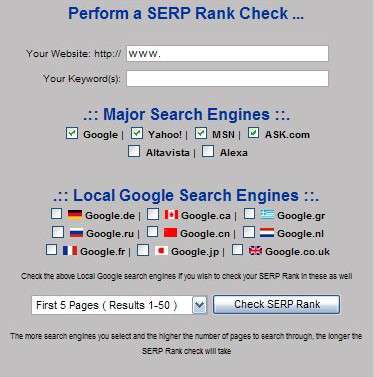
If you’ve been following our last few posts, you now have spent a fair amount of time making your site search engine optimized. And, chances are, you are already seeing a bit more web traffic. However, your website SEO is not complete, nor will it ever be 100%. This is due to step four of the SEO process.
-

Tips to Test and Measure Your Site’s SEO
-
4 Areas of SEO Content Optimization that You Don’t Want to Miss!
Last post we discussed keyword research. Now that you have your keyword list and have tested them for effectiveness, now you are ready for step 3 of improving your website’s SEO.
3. Implement Content Optimization and Submission
Perhaps the most important aspect of improving your site’s SEO, content optimization and submission can also be quite time consuming and somewhat frustrating. There are 4 primary parts of optimizing your website for SEO (This list of 4 is certainly not exhaustive, but they are the key ones to focus on):
- using keywords in your title tags
- using keywords in the H1 tag
- using keywords throughout the body copy
- using keyword phrases as anchor text of links on other sites that point back to your website’s pages
Keywords in Title Tags
Title tags should tell both users and the search engine what a page is about. You will want to have a well written title that is both brief and descriptive for each page of your website so that they show up in the search results of search engines and can increase clicks from targeted searchers. Do not write title tags that have vague titles like "homepage" or "page 3." Titles that are stuffed with keywords and are longer than 60 characters will look spammy and also won’t help, so keep it concise 😉
Keywords in H1 Tags
Using keywords in your heading tags is also very important. There are six sizes of heading tags (H1 to H6) and they work as clues for readers to know what information is to follow. These assorted title tags should be used sparingly, generally no more than one H1 tag to a page. Also, be sure that the H1 tag represents the thesis of the page and is as close to the main targeted phrase as possible. Title tag faux pas are inconsistency in tag size, putting all the information in a title and using heading tags for styling text rather than content structure.
Keywords in Content
As you write the content for each of your site’s pages, it is important to incorporate your keywords throughout the body copy. You should use bold and italics whenever possible, without being overdone, as well as have a list (numbers, bullets, check boxes, etc.) that includes your keywords. Keep in mind that according to Jon Wuebbon, author of Content Rich: Writing Your Way to Wealth on the Web, key phrase use should make up 3-8% of an article or page, but at the same time, don’t get too concerned with the numbers when it comes to keyword density. Just make sure you are aware of the key phrases you are going after and that your text reads logically and doesn’t sound like you are stuffing in as many key phrases as you can. As you create your web page content, be sure that it is easy to read, has a unique approach, focuses on the subject, showcases your services or products and is written with people, not search engines in mind. You should not have duplicated material – even if it is original work – on your site. In addition, your webpage(s) should not have poorly written material with grammatical errors, extensive misspellings (intentional misspellings not withstanding) or excessive amounts of writing on a wide range of topics without using paragraphs, headings or subheadings.
Keywords in Anchor Text
Using keywords and phrases as anchor text on other sites is a great way to direct people to your webpage. Submit articles that contain anchor text links back to your site on sites such as Ezinearticles.com, Buzzle.com, Ehow.com and others. Be sure the text is descriptive yet short and is easily spotted. When using anchor text, do not use long text (e.g. whole sentences), overloaded keyword articles, unneeded links that detract from a site’s usefulness or use generic terms like "page" or "click here".

Once you have implemented content optimization and submission as part of improving your site’s SEO, you are nearly "finished." As you will find in step four, found in our next post, there is no such thing as being completely finished with SEO, but knowing the steps to bettering your site’s SEO is one of the best things you can do to increase business.
-
Critical SEO Tips for Keyword Research
When building or redesigning your website, it is vital to do everything possible to make it rank high in a web search. After all, a website that is only visited by friends and family is not helping you increase your customer base. To help your site rank high in web searches, one of the most efficient methods is the effective use of SEO.
Coined in 1997, SEO stands for Search Engine Optimization. It is the process of making one’s website more accessible and visible to search engines via natural or unpaid (aka- organic or algorithmic) search results rather than through SEM (search engine marketing) which is paid inclusion. When SEO is correctly employed, search engines will crawl your site and find relevance to a search term and the site will rank high at the top of search engine results. The higher your website ranks, the greater potential for business. It should be noted that writing for SEO should be done with social media groups such as Twitter, Facebook and others in mind as Google announced in December 2009 that it would be using the web histories of all its users to populate search results.
SEO is, however, more than stuffing your website with keywords. Paradoxically, too frequently using a keyword or phrase can work against you. To improve your website’s SEO, take these 4 steps (Steps 3 & 4 will be covered in subsequent articles).
- Develop a list of keywords used to search for your webpage, products or services. As you begin creating a keyword list, be thorough but be sure not to only include your brand or company names. You may want to talk to friends and family for keyword ideas. Other ways to develop a keyword list is the use of synonyms (mobile phone, cellular phone, cell phone, etc.). Also, keywords don’t have to be single words; phrases with 3 or more words are known as long tail words or niche words and can bring more search engine hits than individual words.
- Keyword Research and Development- After creating a list of keywords, you are ready to begin keyword research and development through the use of keyword research tools. You can use sites like Word Tracker, Google AdWords, Spy Fu and SEO Digger. These tools range in cost from free to a monthly or annual charge, but are well worth the time (and money) it takes to use them. The keyword research and development tools will show you the most popular search terms for your product or service and how often they are used. With these words and phrases identified you are ready to begin making changes to your website.
Intentionally misspelled words may seem an odd approach, but according to Gyutae Park of Winning the Web , there are 10 million misspelled search queries every day. To find high potential keyword misspellings check out Keyword Typo Generator. No, you don’t want to produce copy that is rife with errors, but including a statement like "Common misspellings are…" or turning a common misspelling into a brand name can make a difference.
It is also critical to look at web analytics such as Click Tracks, Key Word Discovery or Keyword Spy. Web analytics will show you how many times related words are used to find specific information.

Once you have your keyword research finished you will be ready to proceed to step 3…covered next post 🙂
-
How to Seal the Deal with Internet Marketing
Most successful businesses, regardless of their
product, number of employees or physical location, all have at least one
commonality. No, it’s not necessarily winning personalities or state of
the art facilities; rather, it is profitable internet marketing. Also
known as web marketing, online marketing, I-marketing, or E-marketing,
internet marketing strategies use website optimization to increase the
number of consumer visits to a website. Online marketing offers you the
opportunity to measure statistics easily and inexpensively using tools
such as Google Analytics.Types
of Internet MarketingWhile
effective internet marketing does not require an MBA or a degree in
advertising, having a general understanding of the types of internet
marketing strategies will be a definite asset. The main forms of web
marketing are link building, search engine optimization (SEO) and
sponsored (Such as Pay-per-click) advertising.Tips for
Effective Internet Marketing OptimizationIn order to run a
successful business, making the
most of online marketing strategy is a necessity. If you are new to
internet marketing strategies, or merely wish to increase and improve your
current website, consider implementing the following techniques:- Don’t
procrastinate! If you are considering
online marketing, there is no time like the present. - If you
don’t have time to focus on internet
marketing, you may want to outsource the work. After all, it’s better to
invest your money in having someone to manage your online marketing,
than to lose the money you could make by overlooking its potential. - Use social
media sites such as Facebook, Twitter or LinkedIn to promote your
product or services. - Put
information on your site that begs people to check it out. For example,
try using polls, contests, give aways, etc. to get people to come to
your page. - Promote your
product by using e-mail marketing in conjunction with online marketing. - Be
focused. Choose 1-2 main
goals, marketing groups or services and put all your energy there. For
example, there are a TON of social media services out there. Pick one
that you are interested in and become comfortable with that one before
trying another. - If
you have an ecommerce site, have the ability
to track customer orders, maintain order history, and offer related or
suggested items based on their purchases. This is an online marketing
strategy that is effectively employed by sites such as Overstock, Amazon
and E-Bay. - Consider
upgrading your online marketing site to be optimized for the mobile
customer. - Become n expert in your field. Publish articles online about your expertise on sites that you feel will see a decent amount of traffic.
Sealing the Deal with
Internet MarketingBeginning your venture in internet
marketing
means you will be increasing the success potential of your business. Of
course, you don’t have to take these steps alone. Companies like Page
Progressive are there to help you seal the deal through the use
effective search engine optimization, link building through social
media, press releases, article syndication, blogging, and directories,
as well as pay-per-click/sponsored advertising.When using these strategies along with your website, an increase in site traffic
and revenue is sure to be sooner rather than later. An effective, well-designed and easy to use website is a must if you wish to be successful
in today’s business world. - Don’t
-
Link Building: What Websites and Cities Have in Common
Every city is different. Some have multiple
opportunities for adventure, others are known for a certain culture,
and some are known for particular types of commerce, but they all have
one commonality – numerous streets, highways and interstates bringing
traffic in and out of them. A well-marketed website has a lot of similarities
with a city. The roads leading into and out of the city are comparable
to links on a website. And just as having more roads facilitates more
traffic for a city, the more links to your website, the greater the
traffic as well, resulting in greater revenue for you.Implementing Link Building
A web link is a connection from one web
site to another, or even another place in the same website. Link building
is the process of building a large quantity of incoming links. "Incoming"
means that another website links to your website, and not the other
way around. Effective link building is best done by using the following
approach:- Set aside a regular block
of time to dedicate to link building. Although link building is
not tremendously complicated, it does take time. In addition, it is
critical to consistently review your link building and actively seek
more links on a regular basis. Unfortunately, link building is never
"done" as there are always more things you can do to build
links, so setting up a regular time devoted to link building will enable
you to avoid getting complacent with your link building efforts. - Evaluate link building
partners. Use tools like the Google Toolbar (with page rank enabled) which identifies what
search engines think of a sites quality/reputation. The higher the page
ranks (from 0-10) the more a link from that site to yours is worth in
boosting your search engine ranking. Just like a positive referral from
a previous employer would be more valuable to your resume than a referral
from your mom, websites also have varying levels of value.
Find potential link building partners
by searching for phrases that you would like to rank for. You want to
look for reputable sites, such as professional organizations that offer
articles and news posts on their site. Then write an article and submit
it to them to use. If they approve your article, they will most likely
be happy to credit you at the bottom with a link back to your website.- Use directory services
such as the DMOZ Open Directory Project and the Yahoo Directory. These sites feed thousands of other
directories, so being listed in them will result in building a mountain
of incoming links to your site over time. - Set up a blog. This
is one of the best ways to build traffic to your site. It is done by
creating a lot of good content that other people would want to link
to. A blog is a great way to informally build pages of content to your
site over time. Make sure to have your web developer install the blog
locally on your site if possible (i.e. website.com/blog), rather
than using a free external blog to get maximum results. - Post articles and press
releases. A great way to build links is by writing articles and
press releases then posting them on numerous article syndication or
press release websites. - Use social media. Social
media sites, such as Facebook, Twitter, or LinkedIn all can be used
to build more traffic to your site. Experiment with a few social media
sites, find one that you like and dive in. Become an active participant
– read posts, answer people’s questions, actively look for opportunities
to link to other people and for opportunities to promote your blog or
other articles. However, be careful not to come across as only caring
about promoting yourself as nothing will turn people off faster than
that. - Be patient!
Link building is an ongoing process and it can take time to reap the
benefits of your hard work, but rest assured that if you keep at it
you will find significant boosting for your site on search engines.
And the best part is that most of these things don’t cost you a penny.
Forms of Link Building:
There are several forms of link
building to consider.- Contextual links– These are links that are found within large blocks of content. These types of links have high value to search engines.
- Cross linking – When 2 or more websites simply exchange links, but the sites do not have any relevance
to one another and is done only for the sake of building links;
although this used to be a valid and commonly used link building
practice year ago, this is not highly recommended anymore as the links
often cancel each other out as far as page rank is concerned. - Deep linking– Deep links are links that go to a subpage within a site rather than the site’s home page. These are very valuable when link building.
- External links– External links simply mean they are linking to a website other than your own.
- Link bait- Targeting,
creating, and formatting content to encourage others to direct links to
that specific page. Often this is done with polls, contests, really
good content or other materials that other pople find valuable.
When you take the time to implement link
building, the roads into your city can become numerous. Yes, link building can be time consuming, but link building is one of
the keys to high page rankings. The key is to get started, jump in and manage your time wisely! - Set aside a regular block
-

The Reason for the Season
It’s that time of the year again where we find ourselves in the hustle and bustle of the holiday season. There’s decorations to hang, shopping to do, and a million other things on our plate and it’s easy to get overwhelmed by it all. I regret that I have to remind myself why we celebrate at this time of the year…
 The story of
Christmas is about more than presents, and shepherds and wise men and a manger. While spending time with family and friends is one of my favorite aspects of this season, it’s about more than even that.We set aside December the 25th each year as a time to celebrate the birth of Jesus 2000 years ago in a little town called Bethlehem. Historically speaking, there has not been another person to walk on this Earth to have such a great impact on our world. Spiritually speaking, this little baby Jesus began his journey here on Earth
as God in the flesh – A journey that would lead the creator of the universe to a
cross in Calvary to pay an awful price and die, despite no wrongdoing of his own.Here is how it is recorded in the Bible in Luke chapter 2, versus 1-11:
Now in those days a decree went out from Caesar Augustus, that a census be taken of all the inhabited earth. This was the first census taken while Quirinius was governor of Syria. And everyone was on his way to register for the census, each to his own city. Joseph
also went up from Galilee, from the city of Nazareth, to Judea, to the
city of David which is called Bethlehem, because he was of the house
and family of David, in order to register along with Mary, who was engaged to him, and was with child.While they were there, the days were completed for her to give
birth. And
she gave birth to her firstborn son; and she wrapped Him in cloths, and
laid Him in a manger, because there was no room for them in the inn. In
the same region there were some shepherds staying out in the fields and
keeping watch over their flock by night. And
an angel of the Lord suddenly stood before them, and the glory of the
Lord shone around them; and they were terribly frightened. But the
angel said to them, "Do not be afraid; for behold, I bring you good
news of great joy which will be for all the people; for today in the
city of David there has been born for you a Savior, who is Christ the Lord.This year, take a moment to contemplate what Christmas means for you.
This holiday is about celebrating the one gift that we
all were given. A gift that was free, but was not
without cost. An innocent man, God’s one and only son, was put to
death as payment for the sins of the world. For your sin and for mine – so that we may not incur the punishment that we all rightly deserve. And that is certainly worthy of celebrating.Merry Christmas, and may you be blessed during this holiday, and throughout 2010!
-

3 Great Ways to Analyze Incoming Links to Your Site for SEO
One critical element of planning for a link building campaign or to do some competitive analysis is to find out how many incoming links you have to your (or a competitor’s) website and what those links are. There are a ton of great resources out there that help you do this. Here are three free ones that we have found to be very useful.
-

Websites Should NOT Make You Think
When it comes to designing a good website, I always think of the book "Don’t Make Me Think" by Steve Krug. It’s an oldie, but a "goodie." As a web developer, we are always faced with the battle between usability and aesthetics. Not to say that you can’t have both, but they are often at odds with one another. Throw in the need for a website to be search engine optimized and you get even more complexity. Here’s the thing to keep in mind: USABILITY SHOULD ALWAYS WIN.
Why, you may ask? Although it is critical for a website to be found on the internet, and the look of a website can leave a serious impression on a user, having a website that will get your visitors where you want them to go as quickly and easily as possible should be your goal when (re)designing a website. Take a look at a few very successful, yet very simple sites, Google and Craigslist. Both look like they were designed by a middle schooler in 1992, and yet, their simplicity is why they succeed. Both sites make it undeniably simple to do what you should be doing on them.

Sometimes we have to "coach" clients that insist that a website design must contain a 3D spinning logo, long Flash animation or absolutely zero text, but they also tell us that ranking on a search engine is critical to their business. Don’t get me wrong…all of those elements do have their place occasionally, but often the people asking for them don’t have a clear purpose in mind. So, we create what we call a "Predesign" for all of our clients that gives them a wire-frame look at how their site would be organized, based on the client’s initial feedback and the research that we have done in their industry. We use a tool called Basalmiq that makes it super simple to throw together a mock-up. While, it’s certainly not the most robust layout tool, and it’s interface is a bit clunky, it gets the job done quickly and it’s hand drawn look makes it very obvious to our clients that we are not tackling aesthetics with these mock-ups.
Think with Purpose
A website should be structured so that once you identify the 3 things that 75% of all of your visitors will be looking for, make those things very painfully obvious to get to. If you want your clients to fill out a contact form…ask them to do so on your home page, but don’t pop up a window that obstructs the view of the rest of the page that will really annoy someone just looking for your phone number. If you have a lot of information on your site, make a search box easy to find. If you have a really hot product, feature it on the home page. If you want to establish credibility, feature some testimonials or association links. But the critical thing to remember is every element on the home page (and every other page, for that matter) should have a specific purpose…and that purpose is 98% of the time NOT to entertain the visitor with a cool presentation. And don’t even think about using a "splash page" with just your logo on it that clicks through to your home page. That just introduces an extra layer of clicking to get to your site and almost begs them to go somewhere else because they won’t find what they are looking for here.
Of course, there are exceptions to these rules, but the main idea here is to think about WHY you are doing what you are doing with your website, and preferably do that before you get into the aesthetics of how it will look. It’s tempting to jump right into that, and we often get asked for proposals where we give an aesthetic look for a site….but without any data on who will be using the site, why they would be there and what services or products they need to sell, etc.
So the next time you are ready to update your site…think before you shell out the big bucks….or at least hire an expert to think for you. And TRUST them.



 The story of